
KEYNOTES
Come on down.
High energy, hands-on, and a little ridiculous in the best way. People build things, laugh, get competitive, and try something before they know whether they’ll be any good at it. Then we get to work: real classroom stories, the research behind them, and results from years of teaching, plus strategies attendees can use with their own students the very next day.
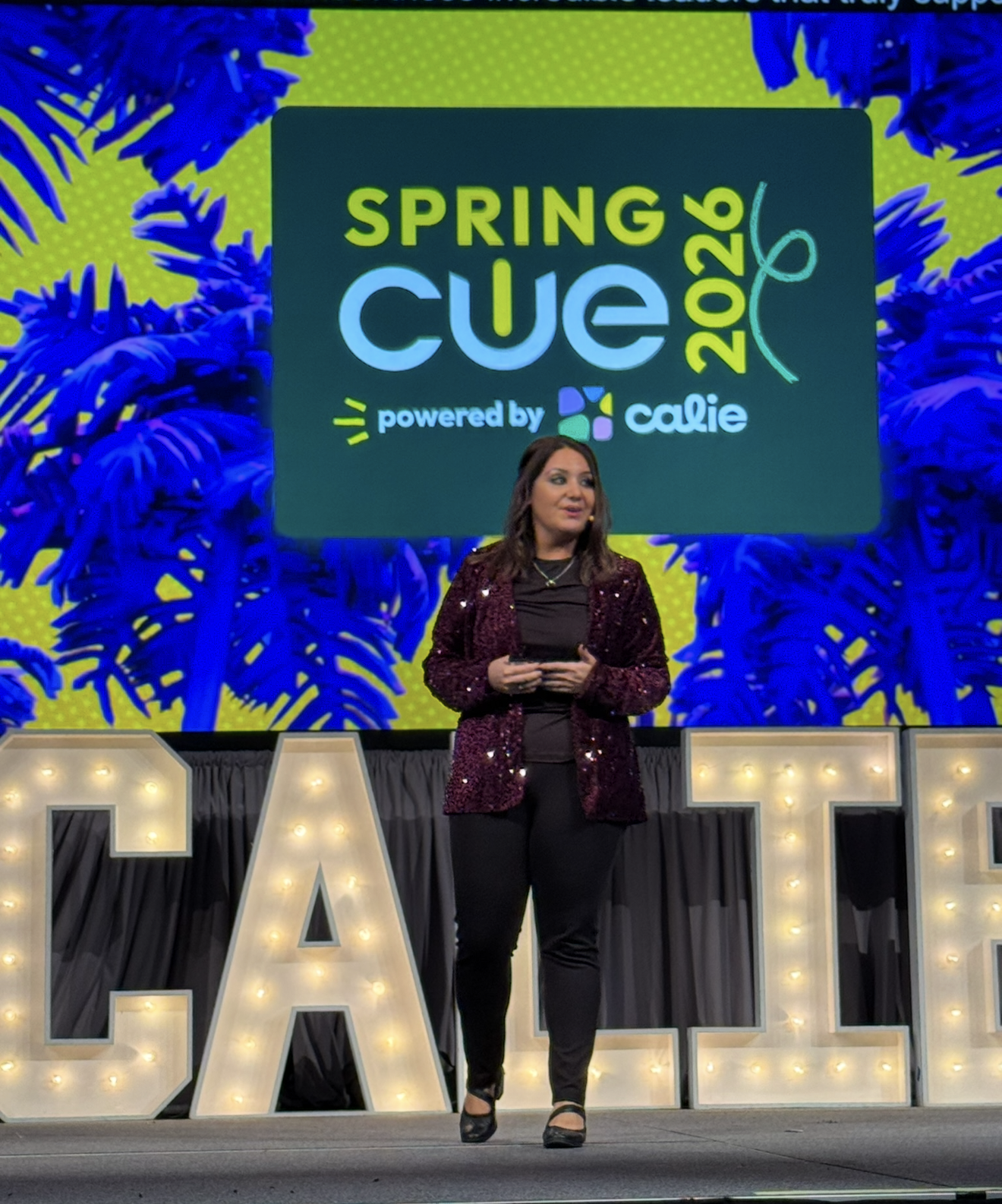
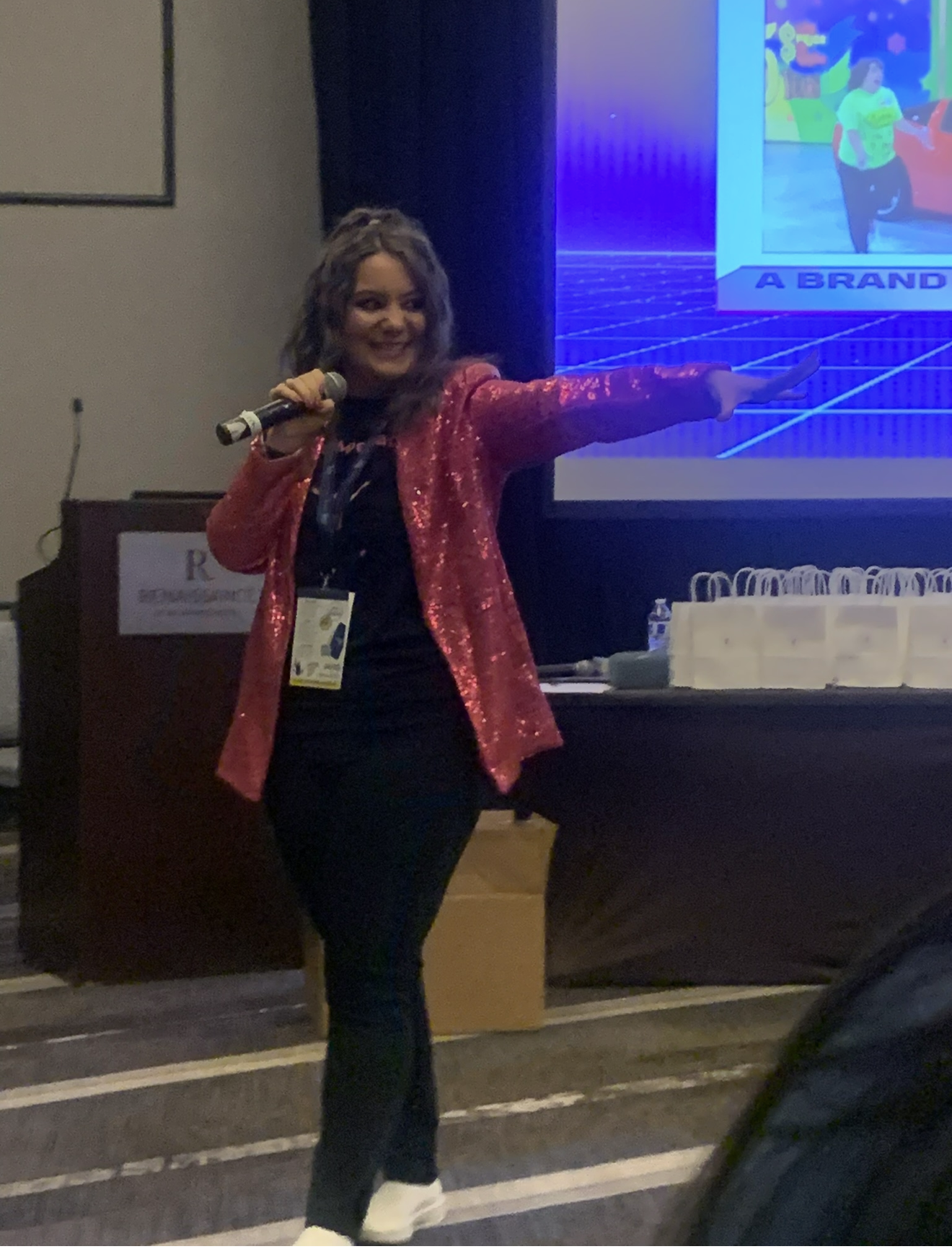
What a Miss Moe keynote feels like
Most AI and edtech sessions start with a slide deck. Mine usually start with a game-show wheel, a sparkly jacket, and a room full of educators racing to the front.
Attendees get called down to spin wheels, pick behind doors, and win prizes.
A game show, not a slide show.
Game boards built from real lessons that people take straight back to their classrooms.
Everybody plays.
Classroom stories, research, and a message people carry out the door: Yes YOU Can!
Then it gets real.
CALIE 2026 opening keynote
Watch the keynote reel
Under two minutes from the main stage at CALIE 2026 (formerly Spring CUE), in front of more than 3,000 educators.
This is what your audience gets: real classroom stories, a room that is laughing and leaning in, and a message people carry out the door.
Book LisaFeatured keynotes
The keynotes I am booked for most. Each one is tailored to your audience and your goals.
Embracing the Now: The Power of the Present in Education
Opening keynote, CALIE 2026, for 3,000+ educators
Education is always talking about what comes next. This keynote is about who is in front of us right now.
The next initiative. The next technology. The next set of skills. Told through students whose stories no data point captured and teachers whose best work was never in the job description, this keynote argues that seeing students as they are today is how we prepare them for the future. It also speaks directly to leaders about what happens when teachers are trusted.
Your audience leaves with:
- A way to see past the labels and scores that arrive before a student does
- A clear picture of what trust from a leader makes possible in a classroom
- A grounded view of AI and every new tool: the teacher still matters most
Best for: opening keynotes, mixed audiences of teachers and leaders, and organizations in the middle of change.
Bridging Education and Innovation
Keynote, SGVCUE 2024. Watch it.
Innovation is not a device. It is the bridge between where a student is and where they want to go.
Educators have been through a pandemic, the loss of tools they depended on, and the arrival of AI, each with no manual. This keynote names what carried them through every shift: knowing students well enough to design learning around them. Then it shows how to use that same skill on whatever comes next.
Your audience leaves with:
- A working definition of innovation built on relationships and equity, not products
- Four classroom practices: purposeful technology, student choice, equity in every new tool, and sustainable teacher wellbeing
- A clear, confident starting point for AI
Best for: conference keynotes, back-to-school convocations, and staff in the middle of major change.
Designing the Future: Student-Centered, Teacher-Supported, Human-Driven AI
District and county keynote
AI earns its place in a school when students, teachers, and the people behind every decision all benefit.
Real classroom examples in place of fear and hype. Students use AI to build, create, and solve real problems. Teachers use it to get time back. Leaders see how to keep ethics and inclusion at the center of a rollout.
Your audience leaves with:
- Examples of students creating with AI, not copying from it
- Practical ways to reduce teacher workload
- A people-first test for any AI decision
Best for: district kickoffs, leadership teams, and staff who are new to AI.
Who Is the “All” in Computer Science for All?
Featured flash talk, CAL-MSCS Models of Practice Summit 2025
When we label, we limit. That applies to students and to teachers.
“CS for All” is on a lot of posters. This talk asks who it still leaves out: the student with an IEP, the multilingual learner, the veteran teacher told she is “not a tech person.” It shows what changes when computer science is treated as a way in, not an extra.
Your audience leaves with:
- A better question than “Are they ready?”: “What do they want to build?”
- Examples from dual immersion, special education, and general education classrooms
- A place in this work for every teacher in the room
Best for: CS and STEAM conferences, equity convenings, and leadership summits.
Have a date in mind? Tell me about your event and your audience.
More keynotes
Newer talks built for what schools and organizations are working through right now.
Throw Them In or Teach Them to Swim: Leading People Through AI
Most educators were thrown into AI the same way they were thrown into 2020. There is a better way to teach people to swim.
A former swim coach and member of California’s statewide AI workgroup shows leaders how to meet every person where they are, from the ones afraid of the water to the ones already doing laps. Practical, funny, and built for mixed rooms.
Best for leadership teams, whole-staff kickoffs, and organizations rolling out AI.
Need First, Then Tech: Access Without Starting Over
Start with what a learner needs. Then choose the tool.
Universal Design for Learning made practical. Live examples of building access into the lesson a teacher already planned, for multilingual learners, students with IEPs, and every learner in between.
Best for inclusion and special education events, teacher audiences, and districts investing in accessibility.
For What? Purposeful Technology in a Less-Screens Moment
The debate is stuck on how much. The better question is what for.
As phone restrictions and screen time concerns grow, this keynote gives teachers, leaders, and families one shared way to tell technology that builds thinking from technology that fills time.
Best for district leadership, board and community sessions, and family events.
Not in the Job Description
The work that keeps students in school and teachers in the profession was never written down.
A keynote about the unseen work of educators: seeing it, naming it, and protecting it. It honors the people in the room and gives leaders concrete ways to keep them.
Best for convocations, teacher recognition events, and new teacher programs.
Be the First Yes: Leading People Through What Is New
Every new idea meets a first response. That response is a leadership decision.
What a classroom teaches any leader about meeting an unfinished idea with curiosity before shutting the door. Built for audiences inside and outside education, including business and media teams.
Best for leadership conferences, corporate teams, and organizations in the middle of change.
The Data Never Had a Job
Students can calculate with data all year and never once need the answer.
Based on my CSEdWeek article for the Computer Science Teachers Association. What changes in a math block when students collect the data themselves, ask who is missing from it, and use it to fix something real. No coding background required.
Best for math, computer science, and STEAM audiences, and any school working on data literacy.
Signature sessions
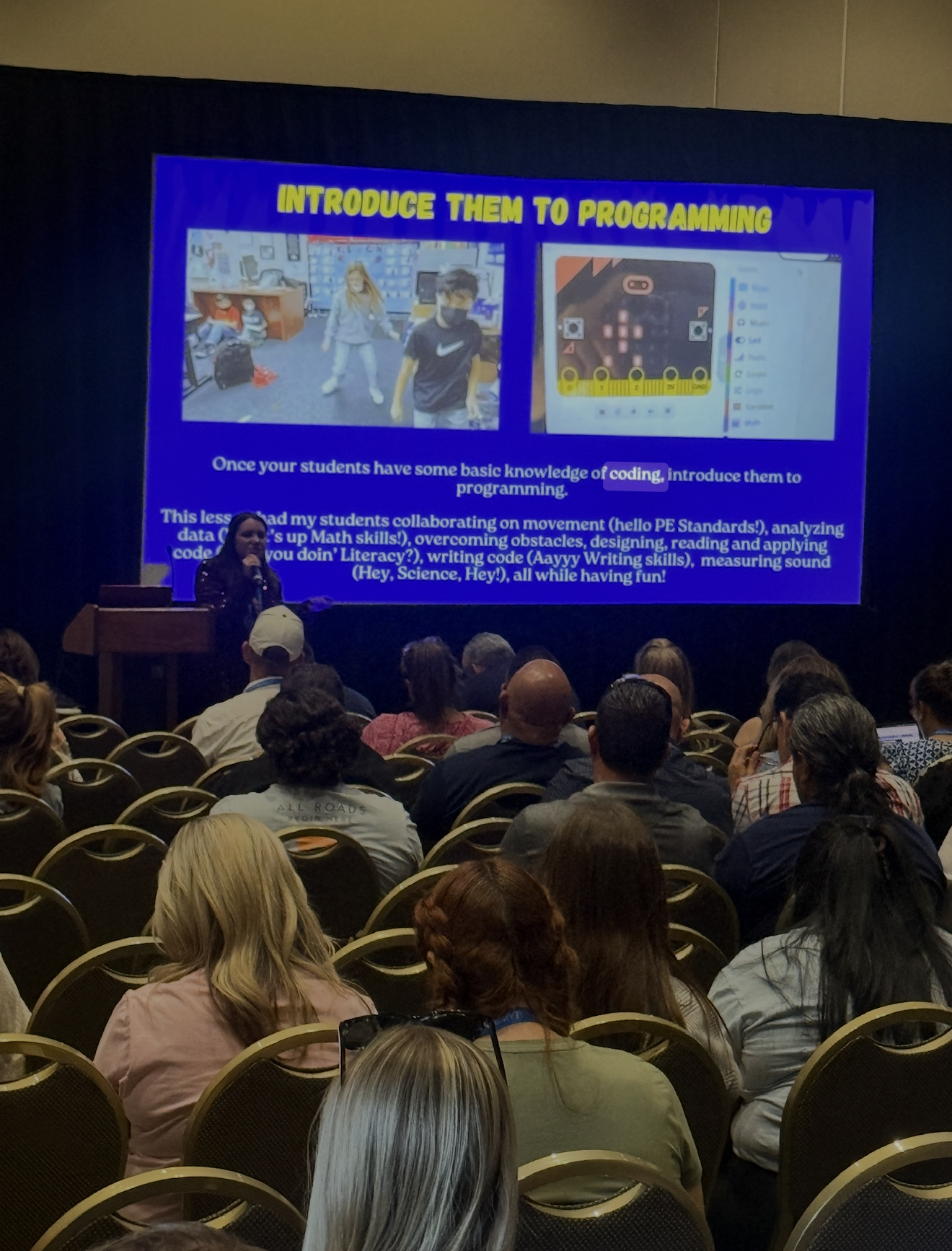
-
A full game show with a purpose. Attendees are called down to spin the wheel, pick a door, and compete through STEAM challenges built from real lessons. Then we take the games apart to see why they work.
Your audience leaves with: ready-to-run game boards and the design moves behind them.
Best for: general sessions, STEAM events, and any room that needs to move.
-
The formats that keep people watching also keep students thinking. The room plays through classroom versions of familiar game shows, then breaks down how each one was built.
Your audience leaves with: game structures they can fill with their own content for any grade or subject.
Best for: teacher audiences and schools working on student engagement.
-
Innovation shown, not described. Real examples of what students built, coded, and taught each other, and what it took to make room for it.
Your audience leaves with: starting points that do not depend on new funding or new devices.
Best for: staff who have seen plenty of initiatives and want proof from a real classroom.
-
A working session, not a sit-and-listen. Teachers bring a lesson they actually teach and redesign it so more learners have a way in. Fast, playful, and built on the Yes Standard.
Your audience leaves with: their own lesson, redesigned and ready to teach.
Best for: workshops, professional learning days, and teams of teachers who plan together.
-
Practical AI literacy from an educator member of California’s SB 1288 Statewide AI Workgroup who also teaches it in schools. Before the tools, the people: what students and staff need to understand, and why.
Your audience leaves with: a shared starting point for AI decisions and classroom examples to build from.
Best for: leadership teams, AI committees, and whole-staff sessions.
-
The screen time debate usually stops at how much. This session asks what for. A practical way to tell technology that builds thinking from technology that fills time.
Your audience leaves with: common language that teachers, leaders, and families can use to make decisions together.
Best for: school and district leaders, advisory councils, and family nights.
-
CALIE (formerly Spring CUE) 2026 keynote for 3,000+ educators, “Embracing the Now: The Power of the Present in Education” · SGVCUE 2024 Innovation Celebration keynote · Kings County STEAM Summit keynote · Lennox School District EdTech Summit keynote · IDEAcon featured speaker · FETC · ISTE · CSTA · ASU+GSV AI Show panelist · Infosys Foundation USA CrossRoads panel moderator · CAL-MSCS Models of Practice Summit flash talk · California Department of Education panels · Professional learning for Riverside County Office of Education, Alvord, Riverside, and Lennox Unified
Where I’ve spoken
Keynotes, featured sessions, and panels at education conferences in California and across the country.
CALIE 2026 (formerly Spring CUE)
Opening keynote for 3,000+ educators
“Embracing the Now: The Power of the Present in Education,” March 2026. See the CALIE speaker page.
Kings County STEAM Summit
Keynote
Lennox School District EdTech Summit
Keynote
“Designing the Future: Student-Centered, Teacher-Supported, Human-Driven AI.”
IDEAcon
Featured speaker
ISTELive (ISTE)
Featured presenter
FETC 2025, the Future of Education Technology Conference
Presenter
“From Ideas to Impact: Navigating the Innovation Journey in Education” and “Breakout from Boring: Using Breakout EDU to Excite and Inspire.”
CSTA, the Computer Science Teachers Association
Presenter
ASU+GSV AI Show
Panelist
Named a 2025 AI Innovator.
CAL-MSCS Models of Practice Summit 2025
Featured flash talk
“Who Is the ‘All’ in Computer Science for All?”
Infosys Foundation USA CrossRoads 2023
Panel moderator
“Unlocking Imaginations Through Creative Media and Storytelling.”
California Department of Education
Panelist
Planning a conference or summit? Tell me about your event.
Booking questions
What does Lisa Moe speak about?
I speak about AI literacy, innovation that starts with people, computer science and STEAM for every student, accessibility and Universal Design for Learning, and purposeful use of technology. Every talk is built on real classroom stories and work I still do with teachers and leaders.
Who are the keynotes and sessions for?
Teachers, school and district leaders, county and state teams, universities, and education organizations. I also speak with audiences outside education, including business and media teams, about AI and leading people through change.
Do you offer virtual keynotes?
Yes. I present both in person and virtually. I am based in Southern California and travel for events.
How long is a keynote?
A standard keynote runs 45 minutes. I can add a breakout session or workshop the same day, and every booking includes a planning call so the message fits your audience and your goals.
What does a keynote cost?
Fees depend on the format, the length, and travel. Tell me about your event and I will send a quote. If you are working with a set budget, say so up front and I will tell you honestly what I can do within it.
How far ahead should I book?
Eight to twelve weeks ahead is ideal for keynotes, and earlier is better during conference season. If your date is sooner, ask. I will tell you honestly whether I can do it well.
What do you need on site?
A wireless microphone, a projector and screen, an HDMI connection, and a short tech check before the session.
How do I book Lisa Moe?
Tell me about your event, your audience, and what you want people walking out believing. I will tell you honestly whether I am the right fit.